
Gujarati Matrimonial Biodata: Format, Examples & How to Create One
Planning to create a Gujarati matrimonial biodata? Use this practical format, example and privacy tips for a clear, meaningful introduction.
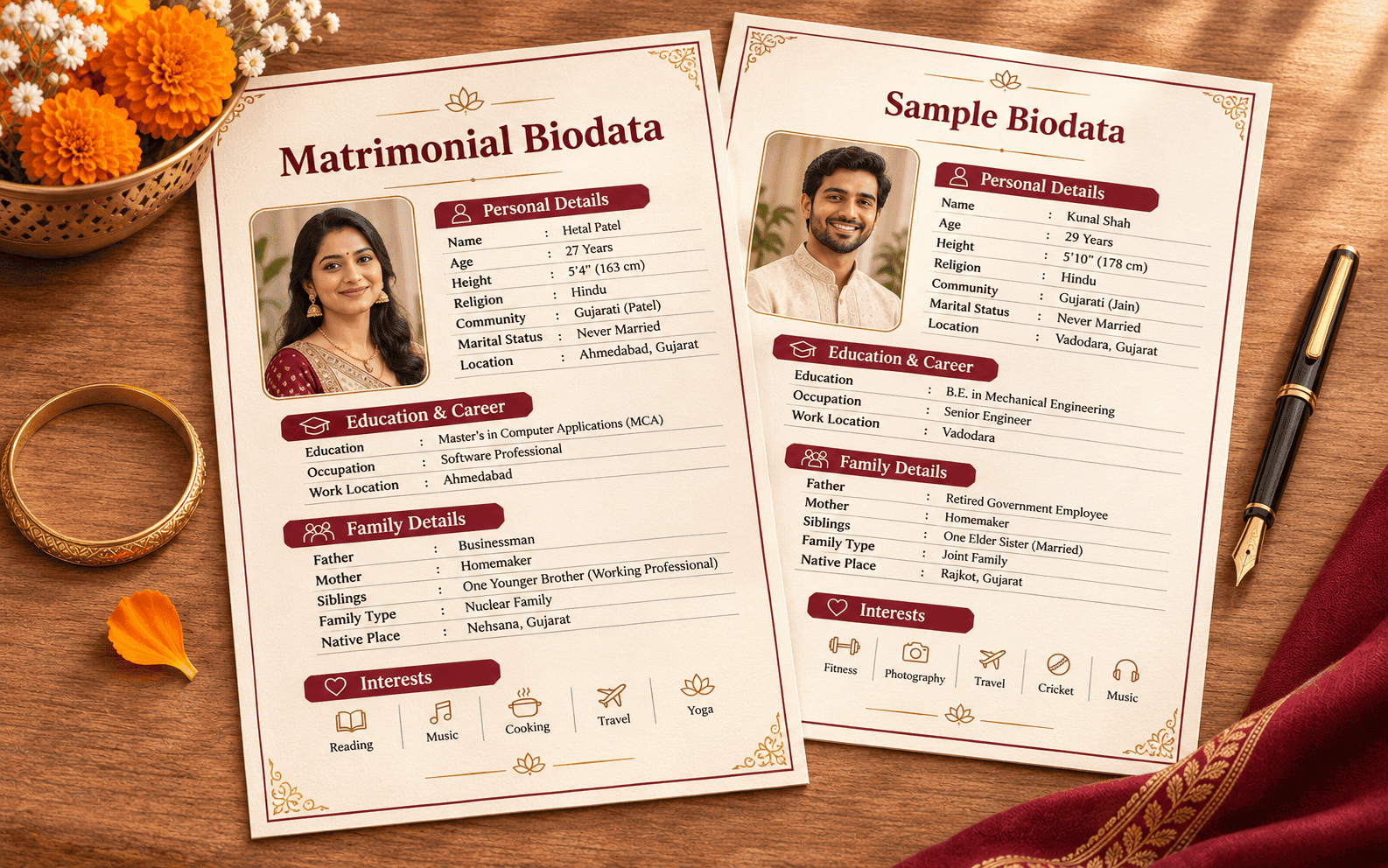
Planning to create a Gujarati matrimonial biodata but not sure what to include?
Whether you’re searching for a life partner yourself or helping your son or daughter begin their matchmaking journey, a well-prepared biodata can make the first introduction easier.
In many Gujarati families, one familiar question marks the beginning of a marriage conversation:
Can you send the biodata?
But what makes a good matrimonial biodata? How much information should you share? And how can you present yourself naturally rather than simply listing qualifications?
This guide explains how to create a clear, meaningful Gujarati matrimonial biodata, with a practical format, example and privacy tips.
1. What Is a Gujarati Matrimonial Biodata?
A Gujarati matrimonial biodata is a personal introduction prepared for marriage-related matchmaking.
It typically contains information about an individual’s education, profession, family background, location, interests and partner preferences.
Traditionally, families exchanged biodata documents through relatives, community contacts or matchmakers. Today, matrimonial biodata can also be shared digitally or used to prepare an online matrimonial profile.
The purpose remains the same: to help two individuals and their families decide whether they would like to begin a conversation.
A biodata should provide a useful introduction, not attempt to describe every aspect of someone’s personality.
2. What Should You Include in a Gujarati Marriage Biodata?
A simple matrimonial biodata can be organised into six sections.
Personal Information
- Name or preferred profile name
- Age or year of birth
- Height, if relevant to your preferences
- Current city and country
- Languages spoken
- Marital status
Some Gujarati families also consider community or sub-community background important. You may include these details if you are comfortable sharing them, but they should not replace meaningful compatibility discussions.
Avoid publishing your exact residential address or sensitive identification information.
Education and Profession
Include your highest qualification, current profession and a brief description of your work.
Bachelor’s degree in Commerce. Working as a finance professional in Melbourne, Australia.
You don’t need to include your employer’s private details or exact income in an openly shared biodata.
Family Background
Family introductions remain important in many Gujarati matchmaking journeys. You might include:
- General family background
- Parents’ occupations, if the family agrees
- Number of siblings
- Family’s city or region
- Whether the family lives in India or overseas
Keep this section respectful and concise.
About Me
This is one of the most useful sections because it helps readers understand the person behind the qualifications.
I enjoy spending time with family, exploring new places and learning new things. I value honesty, open communication and maintaining a balance between professional and personal life.
Write naturally. Avoid exaggerated claims or trying to sound perfect.
Interests and Lifestyle
Include a few genuine interests, such as reading, travelling, cooking, music, sports or community activities. You may also mention lifestyle preferences that are important to your matchmaking decision.
Partner Preferences
Describe what you genuinely value in a future partner.
Looking for a kind, respectful and understanding partner who values family relationships, supports personal growth and believes in open communication.
You can mention important preferences around location, career, lifestyle or relocation. Try to distinguish essential expectations from flexible preferences.
3. Gujarati Matrimonial Biodata Format — Simple Template
Here is a practical format you can adapt.
Personal Details
- Name
- Age / Year of Birth
- Height (optional)
- Current City / Country
- Languages Spoken
- Marital Status
- Community / Sub-community (optional)
Education & Career
- Highest Qualification
- Profession
- Current Work Location
Family Background
- Family Location
- Brief Family Introduction
About Me
Write 3–5 sentences about your personality, values, interests and future aspirations.
Partner Preferences
Write 2–4 sentences about the qualities, values and practical expectations that matter to you.
Photo
Include a recent, appropriate photograph only if you are comfortable sharing it with the intended audience. This format is suitable for a simple document or as a starting point for an online matrimonial profile.
4. Example of a Gujarati Matrimonial Biodata
The following is a fictional example to demonstrate the writing style.
Profile Introduction
- Age: 28
- Current Location: Melbourne, Australia
- Education: Bachelor’s degree in Information Technology
- Profession: Software Professional
- Languages: Gujarati, Hindi and English
About Me
I am a family-oriented person who enjoys travelling, technology and spending quality time with friends and family. I value honesty, mutual respect and a positive approach to life. I enjoy Gujarati traditions while also appreciating an independent and modern lifestyle.
Family Background
My family has roots in Gujarat, India. We value education, close family relationships and supporting each other’s personal aspirations.
Partner Preferences
I am looking for a thoughtful, respectful and supportive partner who values communication and family relationships. I am open to discussing future location and career plans together.
Notice that the example is clear without including unnecessary private information. It also gives a potential match something meaningful to discuss.
5. Common Gujarati Matrimonial Biodata Mistakes to Avoid
A matrimonial biodata doesn’t need to be complicated, but some common mistakes can make it less useful.
- Making it too long: a concise introduction is usually easier to read than several pages of personal details.
- Including only qualifications: education and profession matter, but they don’t explain personality or values.
- Using unrealistic descriptions: be genuine rather than describing yourself as perfect in every way.
- Creating an overly restrictive checklist: preferences are important, but an excessively narrow list may overlook compatible people.
- Sharing too much private information: avoid publicly distributing identity documents, exact addresses, financial details or private contact information.
- Using outdated details: review your information whenever your career, location or circumstances change.
- Preparing a profile without the individual’s consent: if a parent or relative is helping, the person being introduced should understand and approve the information being shared.
6. Should You Create a PDF Biodata or an Online Matrimonial Profile?
Both formats can be useful. A PDF matrimonial biodata is convenient when a family wants to share a structured introduction with a trusted contact.
An online matrimonial profile can support discovery, updated information and platform-based interactions, depending on the service being used.
For some people, a combination works best: a concise biodata for introductions and a more detailed profile for exploring potential connections. Whichever approach you choose, review the privacy settings and understand who can access your information.
7. How SarasJodi Fits Into Your Matchmaking Journey
SarasJodi is a Gujarati matrimonial platform designed around meaningful introductions, personal choice and family involvement.
Creating a thoughtful profile is an important first step in helping potential matches understand who you are and what you value. Rather than focusing only on education, profession and family background, consider describing your interests, expectations and approach to relationships.
Whether you’re based in Gujarat or part of the Gujarati diaspora, the aim is to begin conversations that may lead to meaningful connections.
A good biodata introduces you. A meaningful connection begins when two people understand each other.
Frequently Asked Questions
What is the best format for a Gujarati matrimonial biodata?
A clear format with personal details, education, profession, family background, a short personal introduction and partner preferences is a good starting point.
How long should a matrimonial biodata be?
For a shareable document, one page is often sufficient. Use additional space only when it adds useful information.
Should I include salary in my marriage biodata?
Exact salary information is not necessary in a publicly shared biodata. Financial expectations can be discussed privately at an appropriate stage.
Is a photograph compulsory?
No. Include a photograph only when you are comfortable with how it will be shared and who can view it.
Can parents create a matrimonial biodata for their son or daughter?
Parents can help prepare the biodata, but the individual should be involved and consent to the details being shared.
Can NRIs use the same Gujarati matrimonial biodata format?
Yes. NRI Gujaratis can use the same basic format while adding relevant information about country of residence, career plans and relocation preferences.
Your Saras Jodi
Ready to Begin Your Gujarati Matchmaking Journey?
Your matrimonial biodata is only the beginning. The real journey involves conversations, understanding, shared values and mutual respect. સરસ જોડી મળે, બીજું શું જોઈએ?
Create Your Free SarasJodi ProfileYour Choice. Your Dreams. Your SarasJodi.
Related Guides
Gujarati Matrimonial Guide: How to Choose a Life Partner Beyond Biodata
Seven practical things to consider when choosing a life partner through Gujarati matchmaking — beyond biodata alone.
Read Article →